
When Less Is More: Why Your Spine Story
Matters More Than Your MRI Report
By Dr. Amogh Zawar, Consultant Spine Surgeon, KIMS Hospitals, Thane
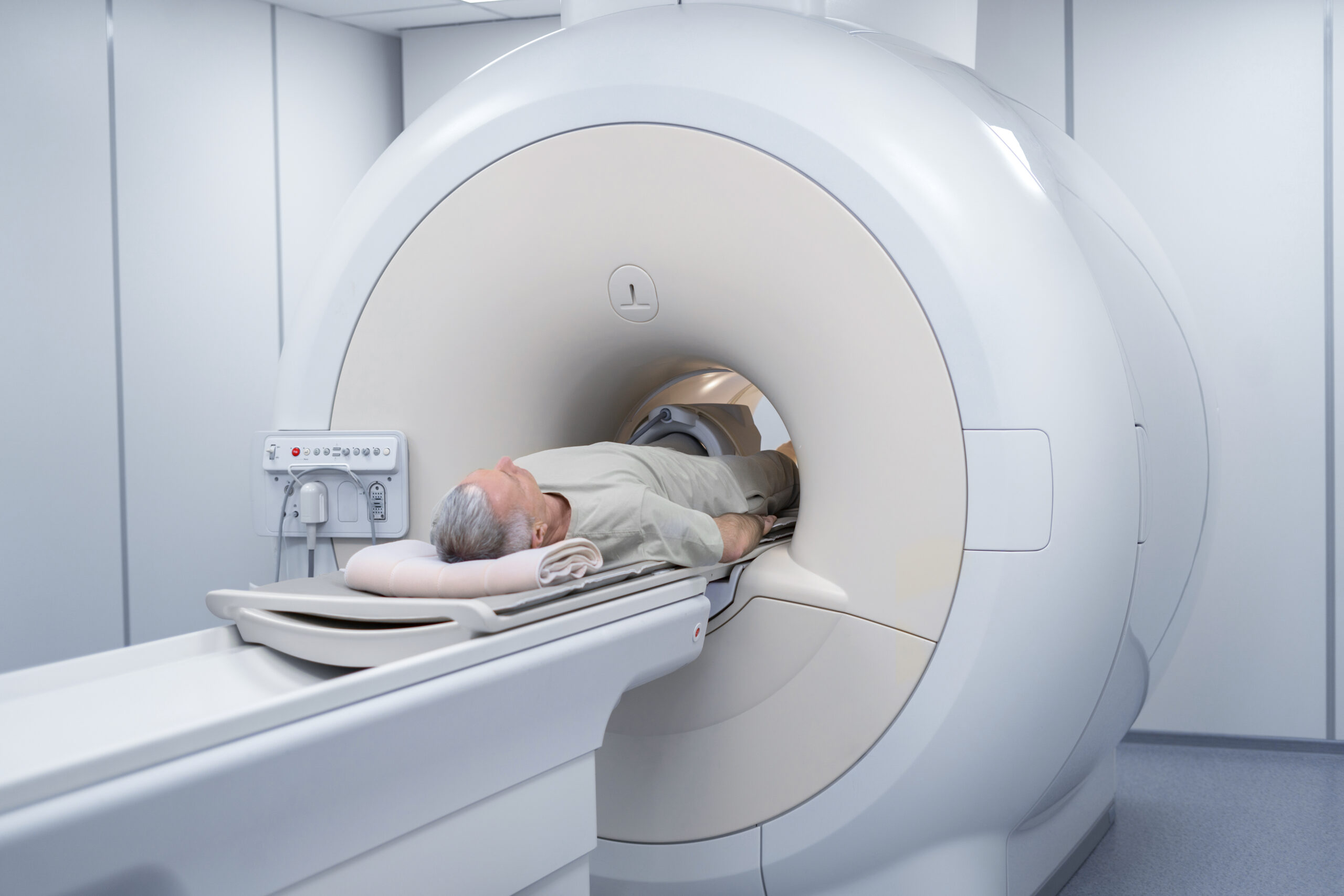
Every week, patients walk into my clinic clutching a thick envelope of X-rays and MRI scans — sometimes ordered before they’ve even seen a doctor. They arrive anxious, convinced that the “disc bulge” or “degenerative changes” on their report is the reason their back hurts. And almost every time, I have to gently tell them the same thing: the report is not the diagnosis.
The Spine Speaks Before the Scanner Does
In my years of spine surgery practice, I have found that a thorough history and careful clinical examination is sufficient to diagnose and guide treatment in nearly 90% of patients with spinal complaints. The way pain behaves — whether it worsens in the morning or at night, whether it travels down the leg, whether it is relieved by rest or aggravated by a particular posture — tells a story that no imaging report can fully capture.
A skilled spine specialist listens to that story first.
The hands-on examination that follows — checking reflexes, muscle strength, sensation, and specific clinical signs — then narrows the diagnosis with remarkable precision. By the time we have finished talking and examining, we almost always know what is wrong and how to treat it.
So Why Is Everyone Getting Scanned?
The explosion in unnecessary spinal imaging is driven by a perfect storm of factors:
- Availability and accessibility. MRI centres are on every corner. X-rays are quick, cheap, and available at a moment’s notice. When something is easy to get, people get it — often before asking whether they truly need it.
- Fear of missing something. Both patients and well-meaning general practitioners worry: What if there’s something serious and we missed it? This fear, while understandable, leads to a cascade of investigations that rarely change the initial management plan.
- Social recommendation. “My neighbour had back pain and the doctor got an MRI done” is one of the most common things I hear. Friends, family members, and even online forums routinely advise imaging for back pain — not out of malice, but out of genuine concern and a misplaced belief that more investigation means better care.
- The feeling that something must be done. Patients often feel reassured when a test is ordered. It signals that the doctor is being thorough. In reality, ordering an unnecessary test is not thoroughness — it is the avoidance of clinical reasoning.
The Hidden Harm of Unnecessary Investigations
Ordering an X-ray or MRI may seem harmless. It is not.
- Psychological burden. Reports are written in medical language full of words like degeneration, dessication, disc bulge, osteophytes, foraminal narrowing. These sound alarming to a patient with no medical background. Many patients read their MRI report and conclude — incorrectly — that their spine is crumbling. This triggers anxiety, catastrophising, and sometimes depression. The scan that was meant to reassure ends up causing harm.
- The “something is wrong with me” spiral. Once a patient has a label — “I have a disc problem” — it changes how they think about themselves and their bodies. They become fearful of movement, avoid exercise, and adopt a fragile identity around their back. This is one of the biggest obstacles to recovery in spine care.
- Financial cost. An MRI of the lumbar spine is not inexpensive. For a family already burdened by medical expenses, an unnecessary scan — followed by unnecessary specialist visits to explain it — adds significant financial stress, often with zero therapeutic benefit.
- Incidentalomas — findings that confuse, not clarify. Here is something the radiology report will never tell you: many MRI findings are completely normal for your age and have nothing to do with your pain. Studies consistently show that a large proportion of people with no back pain whatsoever have disc bulges, degenerative changes, and other “abnormalities” on MRI. The danger of scanning everyone is that we find these incidental changes, attribute the pain to them, and head down the wrong treatment path entirely.
What Investigations Are Actually For
Let me be very clear about the role of X-rays and MRIs in spine care:
Investigations confirm a clinical diagnosis. They do not create one. And they certainly do not decide the treatment plan on their own.
An MRI is indicated when:
- A patient is not responding to a well-structured course of conservative management
- There is a clinical suspicion of a serious cause— such as infection, tumour, or fracture — based on history and examination (what we call “red flags”)
- Surgery is being planned and precise anatomical detail is required
In these situations, imaging is invaluable and irreplaceable. But these situations represent the minority of patients who walk in with back or neck pain.
The Right Sequence of Care
- See a spine specialist first. Not a scan centre. A doctor who will sit with you, listen to your history, and examine you properly.
- Trust the clinical process. A diagnosis reached through history and examination is often more accurate — and more actionable — than one driven by imaging.
- Investigate when indicated. If your specialist recommends an X-ray or MRI after evaluating you, get it done. At that point, the investigation has a purpose and a clinical question it is being asked to answer.
- Read your report with your doctor, not alone at home. A finding on an MRI means very little in isolation. Its significance depends entirely on whether it matches your symptoms and examination findings.
A Final Word
Your spine has a story. It is told through your symptoms, your daily habits, your posture, your work, your history of injuries — and through a careful, unhurried clinical examination. That story is what guides good spine care.
A scan is a tool. Like any tool, it is powerful in the right hands, at the right time, for the right reason. Used indiscriminately, it creates noise where there should be clarity — and worry where there should be confidence.
Come in first. Let us listen, examine, and think. The scanner will still be there if we truly need it.
Dr. Amogh Zawar is a Consultant Spine Surgeon at spineFIX clinics and KIMS Hospitals, Thane. He specialises in minimally invasive spine surgery and the comprehensive management of spinal disorders.
Recent Articles

Our Treatments
Leading Spine Surgeon in Thane

Dr. Amogh Zawar
Specialist Spine Surgeon
FAQs on Walking Recovery After Spine Surgery
No. Most cases of back pain do not need an MRI in the beginning. A proper consultation and examination can often guide treatment. MRI is recommended only when there is a clear clinical need.
In most cases, it is better to consult Dr. Amogh Zawar first. After examining the patient, he can decide whether an MRI is actually required.
No. A disc bulge does not always need surgery. Many patients recover with non-surgical treatment. Surgery is considered only when symptoms are severe, persistent, or associated with significant nerve compression.
Patients with back pain, neck pain, sciatica, or spine-related nerve symptoms can consult Dr. Amogh Zawar, Consultant Spine Surgeon at spineFIX Clinics and KIMS Hospitals, Thane.
A spine specialist checks the patient’s symptoms, posture, movement, reflexes, muscle strength, sensation, nerve signs, and pain pattern. This helps identify the real cause of the spine problem.
Yes. Some MRI findings such as mild disc bulge or degeneration can be age-related and may not be the cause of pain. This is why clinical correlation is important.
Book Your Consultation with
SpineFix Clinic Thane
Share your details and our team will help you schedule an
appointment with Thane’s best spine specialist.
Visit Our Spine Clinic in Thane
Find Spinefix Thane and Get Directions for Your Upcoming Appointment.